Microphones
Microphones are a type of transducer - a device which converts energy from one form to another. Microphones convert acoustical energy (sound waves) into electrical energy (the audio signal).
Different types of microphone have different ways of converting energy but they all share one thing in common: The diaphragm. This is a thin piece of material (such as paper, plastic or aluminum)which vibrates when it is struck by sound waves.
There is an overwhelming number of microphones that is available for pro recordings and picking the best is a task. All these microphones can the categorized into the following:
Condenser Microphones
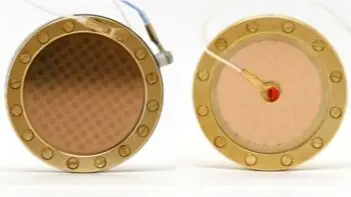
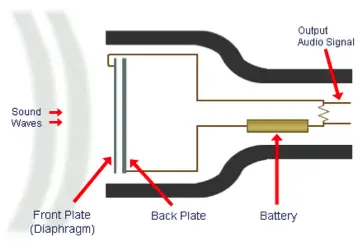
Condenser microphones work by using a capacitor to convert acoustic vibrations into electrical current.
Condenser microphone capsules transduce energy via electrostatic principles. The basic condenser microphone capsule is designed as a circular parallel-plate capacitor. These need an external power source to function i.e. 48V phantom supply.
This can be again categorized into Large Diaphragm Condenser (LDCs) and Small Diaphragm Condenser (SDCs).
LARGE DIAPHRAGM MICROPHONES (LDC)
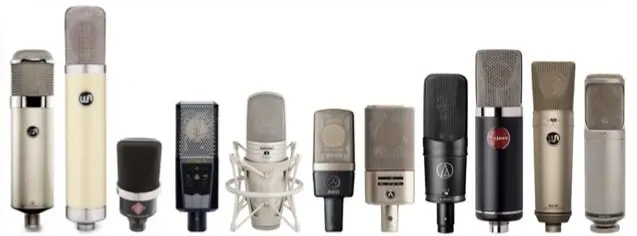
LDCs They’re the large, stylish and serious looking mics that you see in most professional recording studio situations.
Large diaphragm condensers exhibit a number of sonically pleasing qualities for voices. They help create that “larger than life” sound that we associate with pro studio vocals.
But LDCs are effective on all kinds of sources. If you’re looking for one mic that can handle every task, consider a large diaphragm condenser.
SMALL DIAPHRAGM MICROPHONE (SDC)
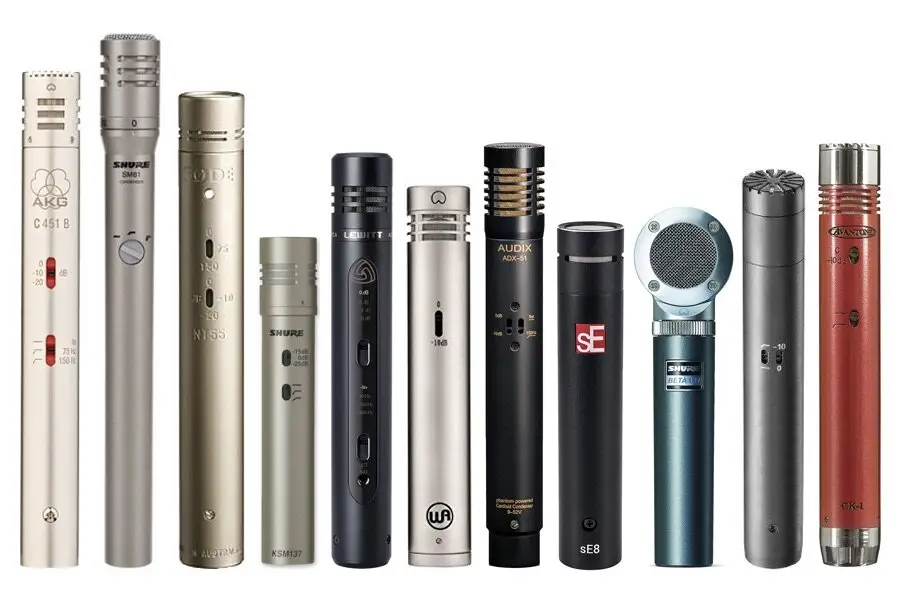
SDCs sometimes called pencil condensers are the smaller, less flashy than of the LDC. But they’re just as useful, despite their small shape. Small diaphragm condensers have great transient response, extended top end, and consistent pickup patterns.
This makes them great for realistic stereo techniques as well as acoustic instruments. If you sat in on classical music recording session, chances are you would see mostly SDCs.
They often come in pairs for stereo recording, so they’re particularly effective for creating accurate stereo images of real acoustic spaces.
Some common uses of SDC are:
- Ideal for recording acoustic guitars
- Perfect for precision recording and capturing subtle nuances on pianos or acoustic guitars
- They do need a power supply
- Very sensitive to breathing and “popping”
Dynamic Microphones
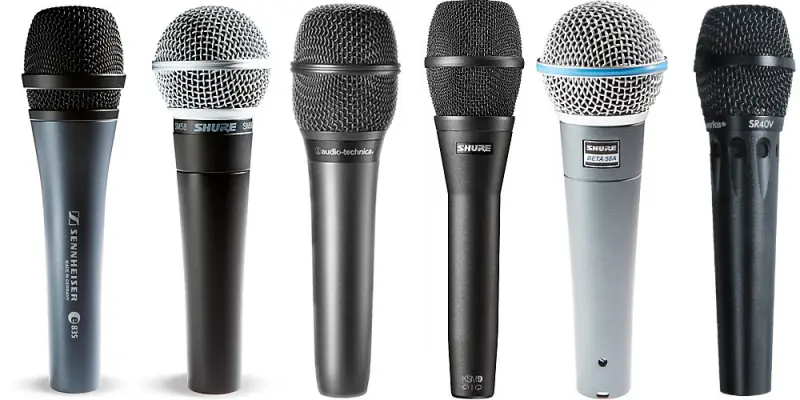
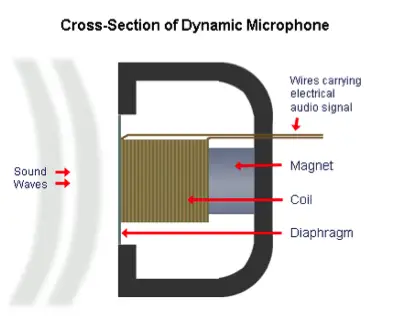
In a dynamic microphone, sound waves hit a thin metallic diaphragm that is attached to a coil of wire, sound waves cause a movable wire or coil to vibrate in a magnetic field and thus induce a current, to then be converted back to sound.
The diaphragm vibrates the coil in response to the sound wave. A magnet that is positioned inside the coil produces a magnetic field. It is the motion of the coil in the magnetic field which generates the electrical signal. The principles are the same as those used to generate electricity; electromagnetic induction.
Dynamic microphones are versatile and ideal for general-purpose use. They use a simple design with few moving parts. They are relatively sturdy and resilient to rough handling. They are also better suited to handling high volume levels, such as from certain musical instruments or amplifiers. They have no internal amplifier and do not require batteries or external power.
Dynamic mics are responsive to transients and handle high SPL very well. This makes them a natural choice for loud sources like drum kit close mics and guitar and bass cabs. Dynamic mics are the workhorses of the microphone world, from studio to live applications.
Ribbon Microphones
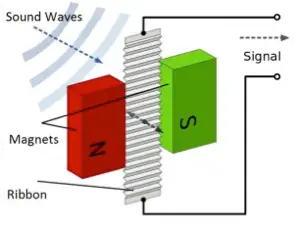
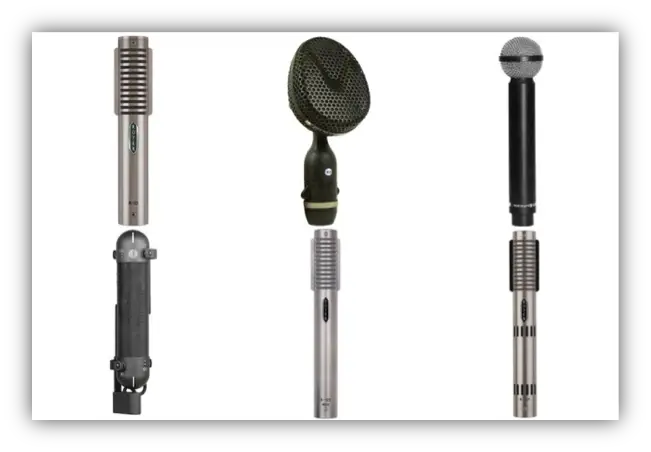
The ribbon microphone consists of a corrugated aluminium ribbon suspended edgewise between the poles of a magnet. The ribbon microphone is designed so that there are only very small gaps between the edges of the ribbon and the magnet sides. This means that the ribbon is moved by the velocity of the air rather then the sound pressure acting upon it.
Ribbon microphones are the most natural mics that you can use to capture the sound of an instrument, a voice, and even the ambience of a room. Massive low-end pick-up, and natural high-frequency roll-off, ribbons really hear more like your ears than any other mic out there.
Early ribbon designs were incredibly fragile. Moving them improperly, or even subjecting them to high SPL could cause the ribbon to break. Ribbon mics are prized for their warm, vintage tone. They’re perfect for when you need to tame excessive or harsh high-end: sources like guitar amps, drum overheads or brass. Ribbon mics are great for drum overheads, capturing cymbals without the tizzy hype.
Choose microphone types wisely - In recording, microphone choice is probably the most important factor after the quality of the instrument itself.
Get it right by selecting the right microphone types and get the best mic for your needs.