
May it be a power driven rock song or a soft jazz or a pop number, drums always in whole hold the entire pulse and rhythm of the song. In various arrangements drums can be played right from dynamically soft to dynamically loud, a weak drum sound would mean the entire mix crumbling down. So here are some tips which would help you in laying down a better fundamental drum sound.
1. Tuning
Drums is not a melodic instrument, but they do need an exact tuning to make sure the kick & snare is in tune to the root of the song. Toms are generally tuned to different intervals within the key of the song and the number of intervals depends on the number of toms, fewer toms- larger intervals and vice-versa. So even if you are not a drummer, learning how to tune drums takes you a long way.
2. Phase
Drums are recorded by using a multi-miking set-up. And when multiple mics are used to record a sound source then issues related to phase are a common problem. Before proceeding to process the individual elements of the drums, it is important to make sure that the phase relationship of all the tracks are intact, without which the drums will sound weird or cancelled.
3. Additive equalization
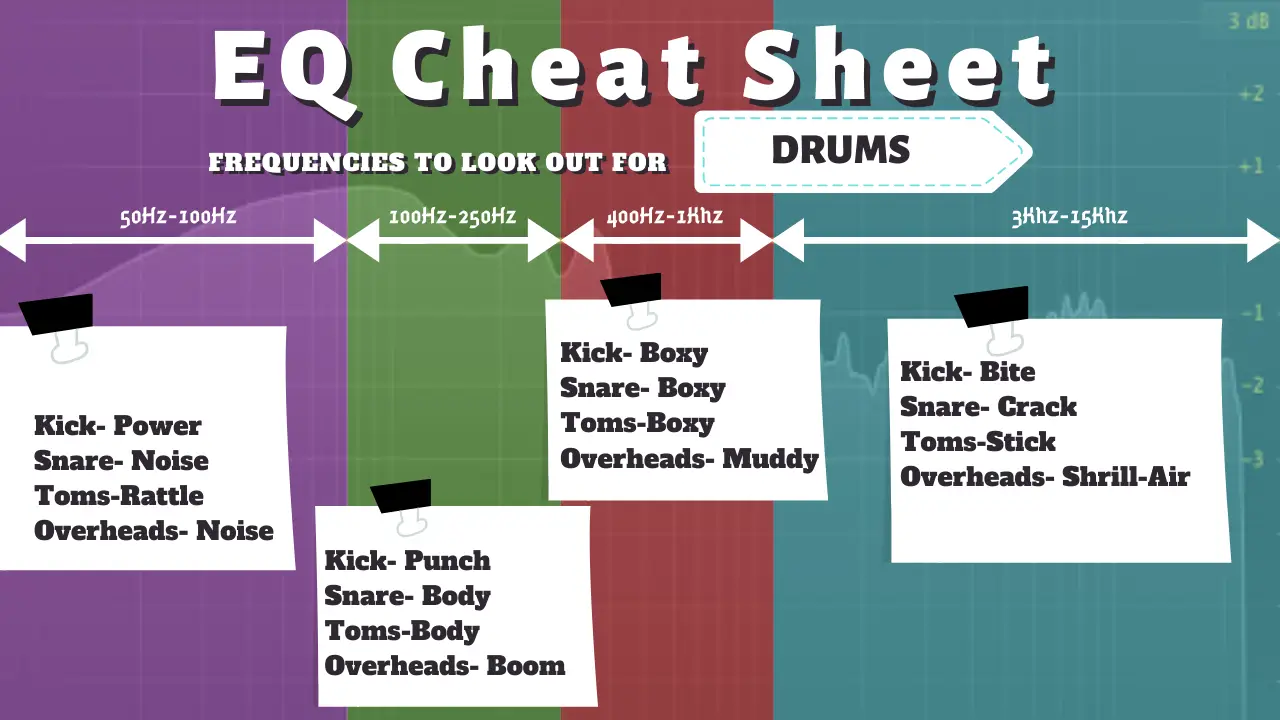
KICK
Lows: 50Hz - 100Hz — Great for adding power, but too much can cause boominess
Low mids: 100Hz - 250Hz — Great for adding fatness, but too much can cause muddiness
Midrange: 400Hz - 800Hz — Too much can cause boxiness
High mids: 3kHz - 5kHz — Great for adding snap, attack, and beater noise; too much can be harsh.
SNARE
Low mids: 100Hz - 250Hz — Great for adding fatness, but too much can cause muddiness
Midrange: 400Hz - 1kHz — Usually where the fundamental ring can be found; too much can cause boxiness
High mids: 3kHz - 5kHz — Great for adding snap and attack, too much can be harsh
Highs: 10kHz — Great for adding 'air' and 'buzz,' too much can be shrill.
TOMS
Lows: 65Hz - 100Hz — Great for adding power to floor toms, but too much can cause boominess
Low mids: 100Hz - 200Hz — Great for adding power to rack toms, but too much can cause muddiness
Mids: 400Hz - 800Hz — Too much can cause boxiness
High mids: 5kHz - 7kHz — Great for adding snap and attack; too much can be harsh.
CYMBALS/OVERHEADS
Low mids: 200Hz - 500Hz — Great for adding “meat” to cymbals, but too much can be muddy or boxy
High mids: 3kHz - 5kHz — Great for adding presence, but too much can be harsh and fight with the vocal
Highs: 7kHz - 12kHz — Great for adding ‘air;’ too much can be shrill.
4. Compression
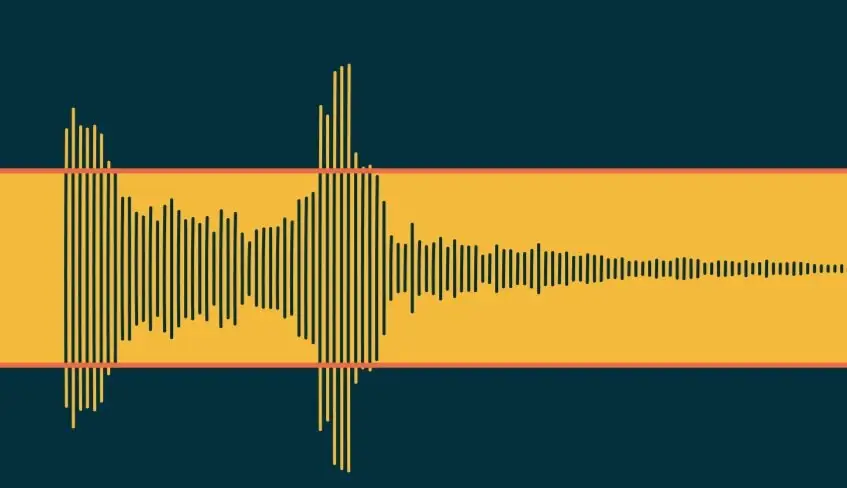
Compression is very subjective and a personal choice. Every mix engineer has his/her own method or approach to compress a signal. Here are a few guidelines that can be followed for achieving a steady drum sound. Usually start with a ratio of 4:1 or 6:1 and the amount of gain reduction depends on how dynamically the drummer has played and also to the feel of the song.
A slower attack time lets the initial transient or the impact to pass through before being compressed. Setting it too slow can result in missing out some hits.
A faster attack time clamps down on to the initial transient and dulling the initial attack down, which helps in tightening the performance, which is great for adding control. Setting it too fast can suck the life out of the track.
Setting the release fast gets the drums up in your face. Setting it too fast will cause to a very unnatural pumping sound.
5. Reverb

Adding a reverb to the drum sound gives a sense of depth to the kit. The type of reverb sound depends on the song and also on the creative aspect. The best way is to leave the reverb loud enough so that when you mute the reverb channel, you just miss it. Not to keep so loud that it draws your attention every time the drums plays.
Some common types of reverbs used in drums are:
- Plate Reverb
- Hall Reverb
- Room Reverb
- Digital reverbs (Vintage Emulations)