
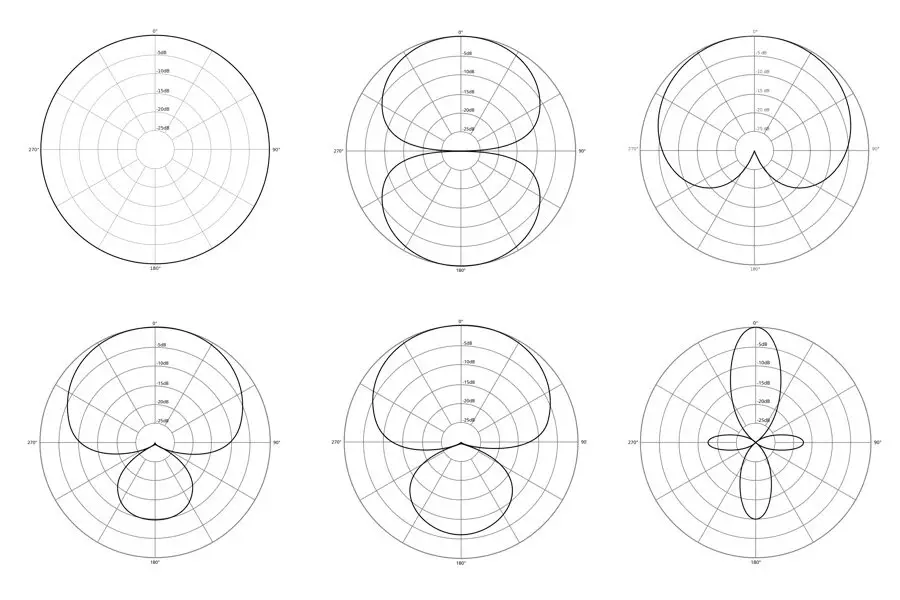
What is a microphone polar pattern?
A polar pattern is a representation of a microphone’s directional sensitivity to sound pressure. Polar patterns tell which direction(s) a mic will be sensitive to picking up sound and which direction(s) a mic will reject sound.
Every microphone manual that you may read includes a description of the different microphone pickup patterns and depicts a printed image of the same. And what we would really want you to know is what benefits the different patterns have to offer, and in what situation you might choose them. It is worth remembering that although the printed polar patterns are in two dimensions, the actual pattern is three-dimensional. For example, an omnidirectional microphone pattern drawn on paper looks like a circle, but in reality it is a sphere.
A microphone’s polar pattern is an important consideration when it comes to figuring out if a microphone is the right or wrong tool for a particular situation.
1. OMNIDIRECTIONAL
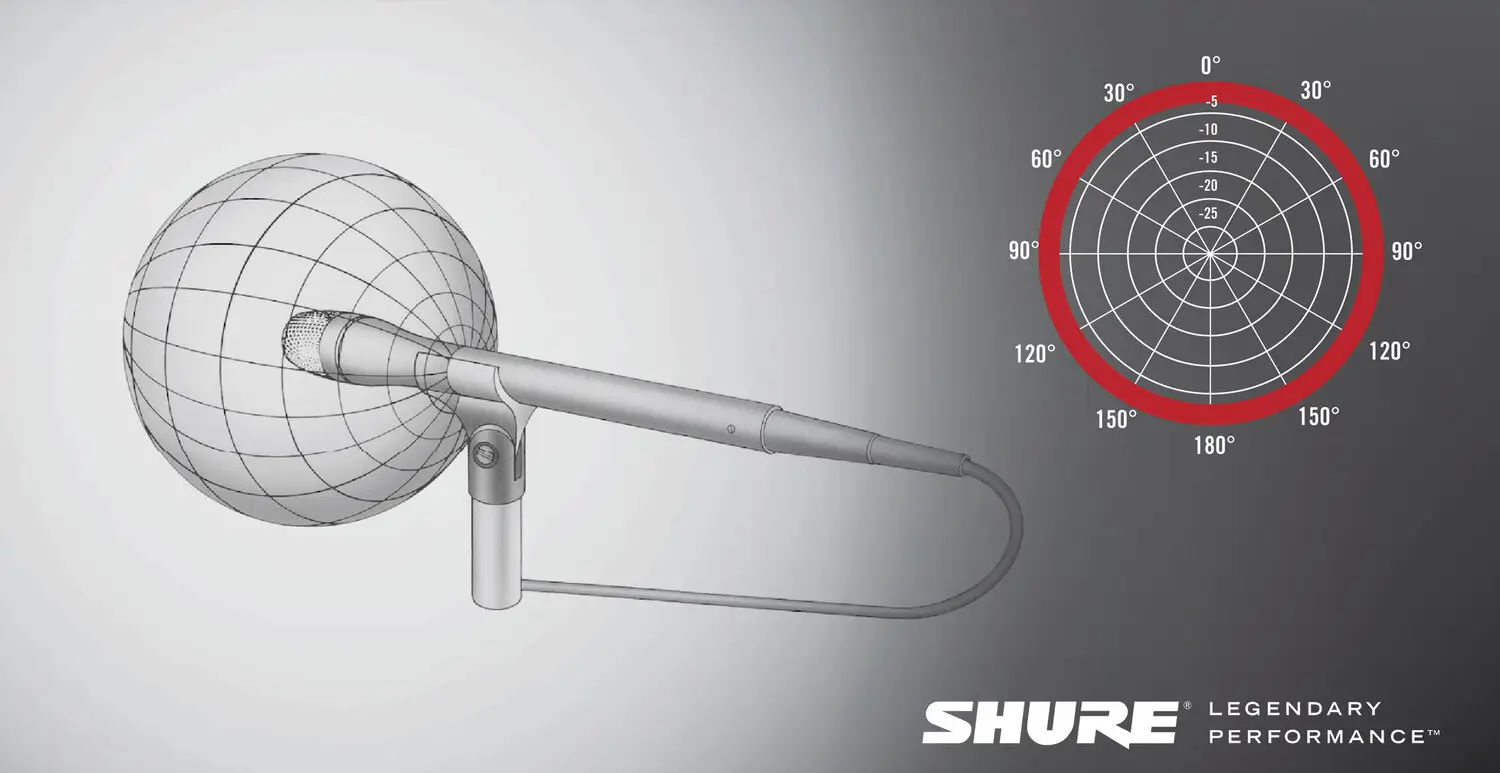
- Omnidirectional microphones pick up sound from all directions in a perfect sphere, resulting in an incredibly natural and realistic audio recording.
- Because omnidirectional microphones work on the pressure principle, they exhibit absolutely no proximity effect.
- An omni pattern provides the best bass response, flattest frequency response, and is the least sensitive to handling or wind noise in comparison to all other polar patterns.
- Recordings that were done in a bad sounding room using an omni polar pattern might not lead to a satisfying result.
- Using an omni microphone in a live scenario where the picked-up signal is monitored and played back through the PA, feedback can be an issue.
- Examples- Neuman M50, DPA d:screet CORE 6060, Neumann KM 183.
2. BIDIRECTIONAL
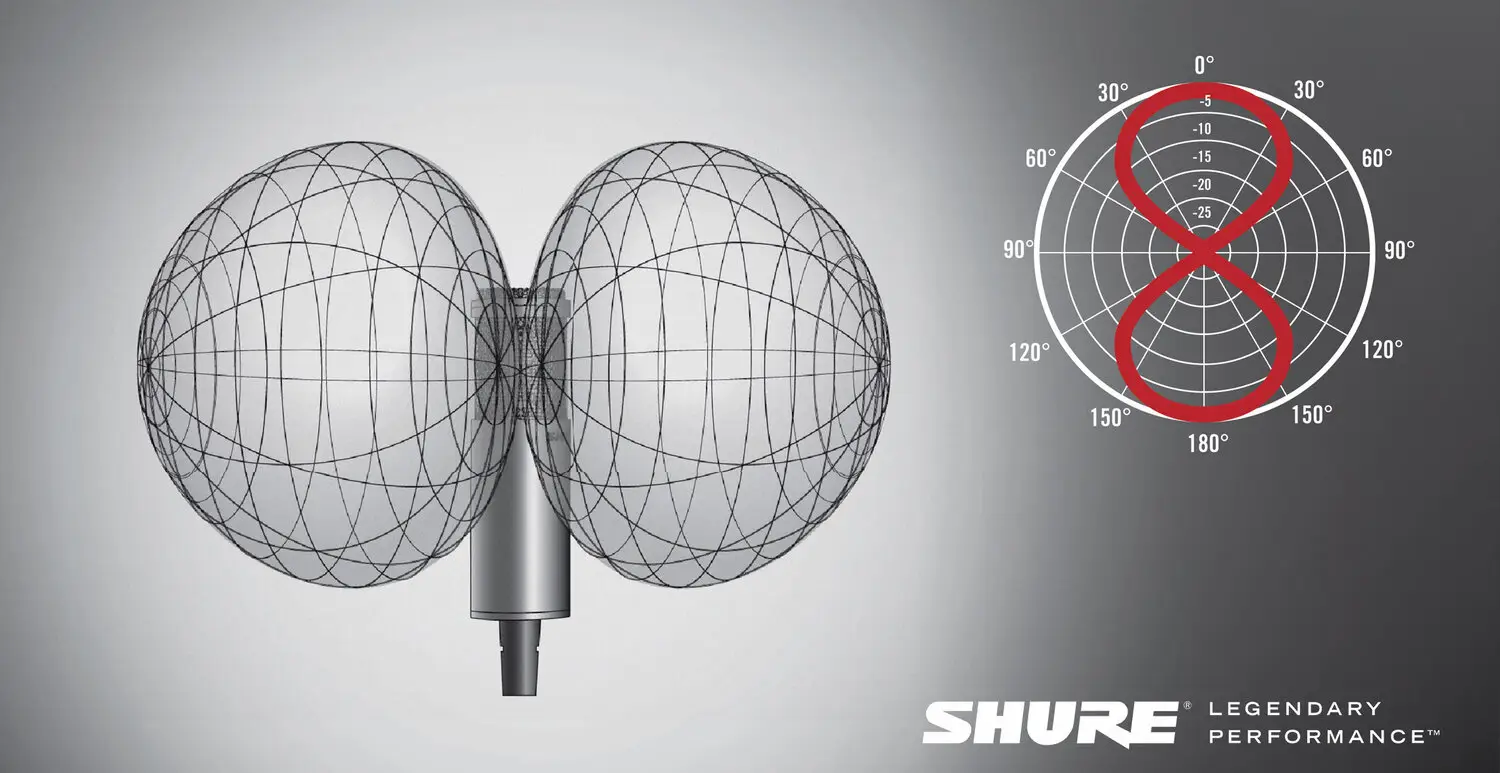
- Bidirectional microphones, also known as figure-of-eight devices, pick up an equal level of sound from the front and the rear, but sound from the side is blocked out, hence the '8'-shaped polar pattern.
- The only difference between the front and back is the polarity in which the sound affects the microphone. The front of the diaphragm reacts to sound with positive polarity while the rear of the diaphragm reacts to sound with negative polarity.
- These mics are sensitive to vocal plosives and also exhibits the most proximity effect.
- It’s a standard pattern for ribbon microphones.
- Examples - Royer R-121, AEA R84
3. Cardioid or Unidirectional
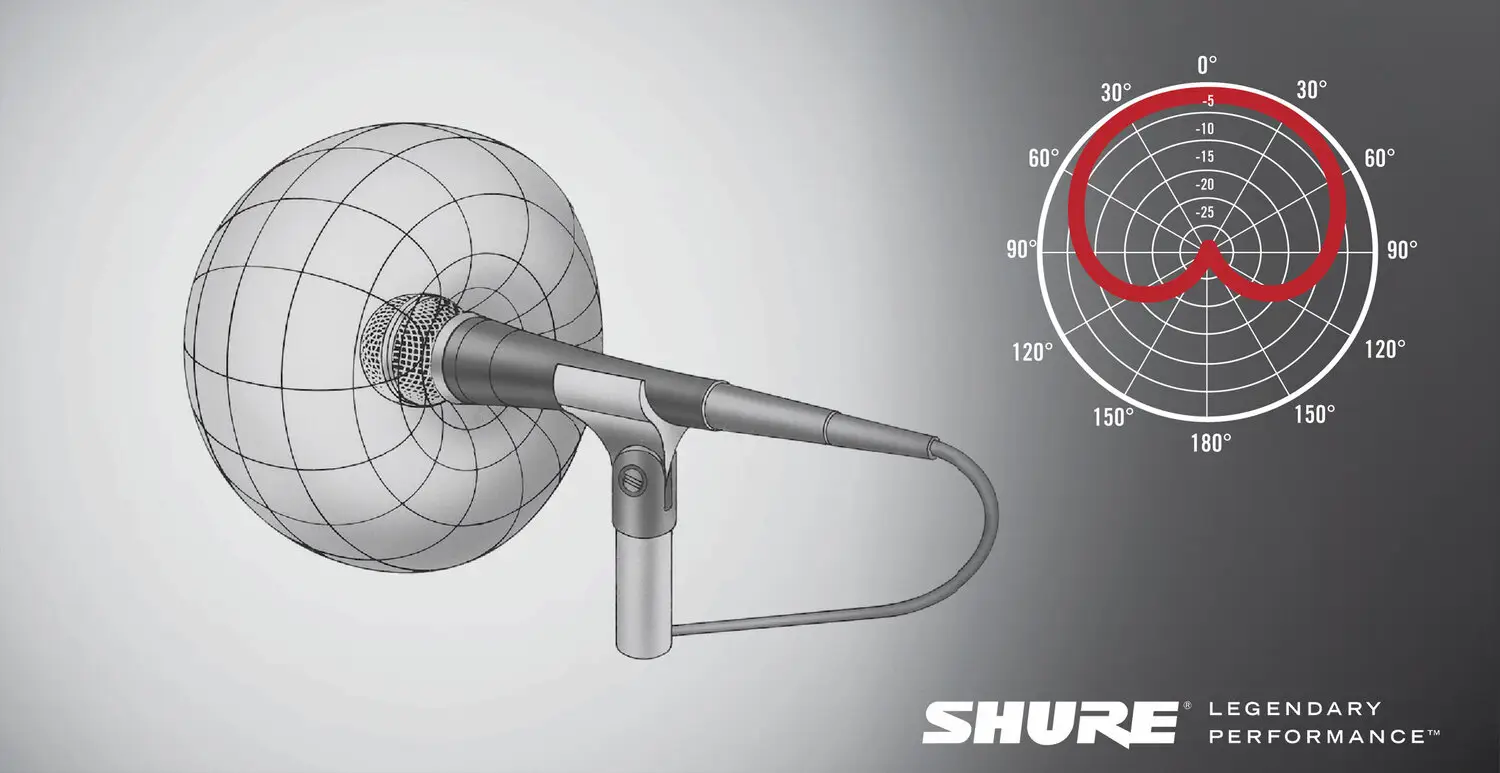
- The name is derived from the Greek word of “heart” as the polar pattern is similar to it.
- A cardioid microphone has the most sensitivity at the front and is least sensitive at the back.
- This isolates it from unwanted ambient sound and gives much more resistance to feedback than omnidirectional microphones.
- The cardioid polar pattern is by far the most popular and commonly used.
- Its simple unidirectionality combined with its rear rejection makes it an excellent choice in most situations in the studio, on the stage, and in broadcasting.
- These mics are sensitive to vocal plosives and also exhibits the most proximity effect.
- Examples- Shure SM57 and SM58, Neumann KM 184, Rode NT1-A
4. SUPERCARDIOID
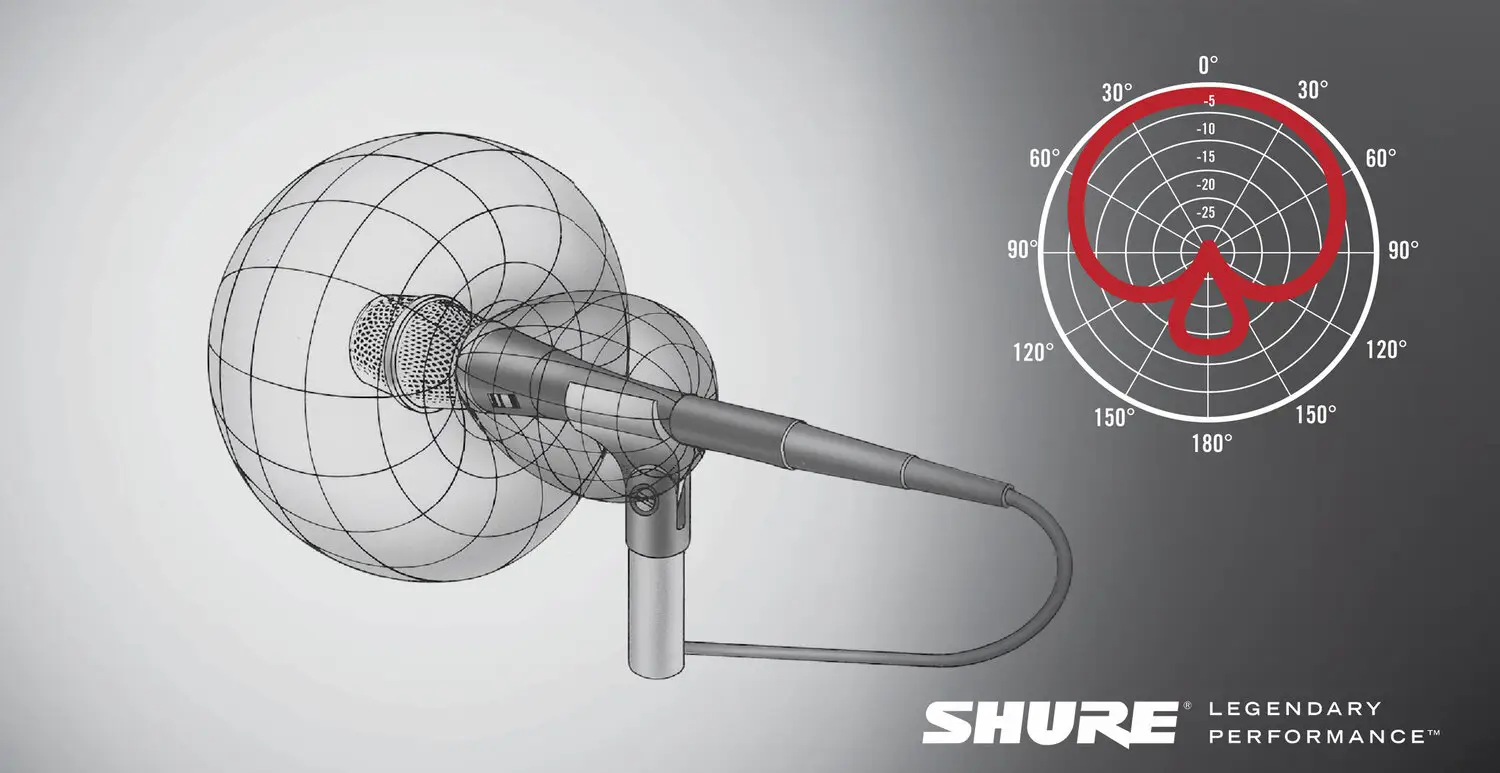
- A supercardioid mic has a tighter pickup angle than a cardioid, but unlike the cardioid, it offers more side rejection.
- It is, however, slightly sensitive to sound sources that are directly behind the mic.
- A supercardioid provides better isolation from room noise and nearby instruments and can be more resistant to feedback than a cardioid mic, but it requires the user to maintain a more consistent position directly in front of the mic.
- It exhibits similar properties as the cardioid microphones
- Examples - Sennheiser MD 441U, Electro-Voice PL35, Beyerdynamic MC 950
5. HYPERCARDIOID
- The hypercardioid polar pattern (like the closely related supercardioid) is a more directional version of the standard cardioid pattern.
- Hypercardioids feature some of the characteristics of a bidirectional microphone (described below) in that they have more sensitivity to the rear; however, they reject sound well from the sides and are exceptionally good at rejecting feedback.
- Because they are so directional, they require very precise placement to the source.
- Like a supercardioid pattern, the hypercardioid provides extreme rejection of ambient sound sources.
- Examples - Neumann KM 185, Beyerdynamic M 160, Audix D4